Annie Brown Kennedy, first Black woman to serve in the N.C. ... - Winston-Salem Journal
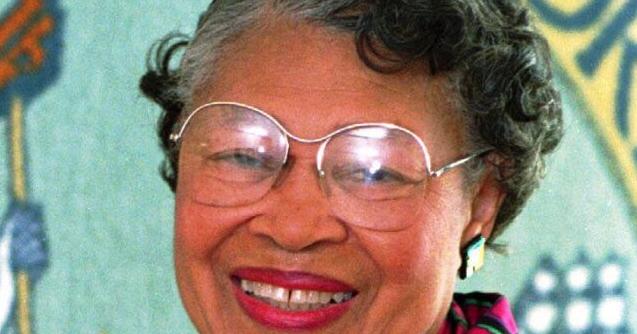
Annie Brown Kennedy, the first Black woman to serve in the N.C. General Assembly and a prominent local attorney, died Tuesday of natural causes at her Winston-Salem home, a family member said. Kennedy was 98.
"She was a wonderful mother," said Harvey Kennedy, one of her sons. "She was a trailblazer."
Harold Kennedy pointed to his mother's legislative career and other achievements. Annie Kennedy was the second African American female attorney in North Carolina and the second female attorney to practice law in Forsyth County, Harold Kennedy said.
A native of Atlanta, Annie Brown Kennedy received a bachelor's degree in economics from Spelman College and a law degree from Howard University School of Law, according to her biography.
In 1954, Annie Kennedy passed the N.C. Bar Examination, and she began practicing law as a sole practitioner, according to her biography. Annie Kennedy was licensed to practice law in Georgia and North Carolina as well as in many federal district and circuit courts and before the U.S. Supreme Court.
People are also reading…
In 1955, her husband, Harold Kennedy Jr. joined her in the practice of law, forming one of the first husband and wife partnerships in the state. Annie Kennedy was a partner in the Winston-Salem law firm of Kennedy, Kennedy, Kennedy and Kennedy, where she practiced law with two of their three sons, Harold Kennedy III and Harvey Kennedy.
The Kennedys' law firm specialized in family law and civil litigation. The firm handled many civil rights cases, including racial and sexual discrimination and sexual harassment cases, according to Annie Kennedy's biography.
Annie Kennedy served as the first African-American female presidential elector in 1976 for North Carolina, the year that Democrat Jimmy Carter was elected president, Harvey Kennedy said.
Three years later, Gov. Jim Hunt appointed Annie Kennedy to the N.C. House, District 29, replacing Judson D. DeRamus Jr., who became a Superior Court judge.
"I remember her well," Hunt said of Kennedy on Tuesday. "I was very proud to appoint her because I had seen the work she had done in Winston-Salem."
Hunt described Annie Kennedy "as a real pioneer in terms of African American leadership in one of the major cities in North Carolina."
The former four-term governor said he appreciated Kennedy's focus on education, children and equal opportunity.
"She was a real scrapper when it came to getting opportunities for people," Hunt said. "She made no bones about that. I was real proud to have an opportunity to appoint her."
Annie Kennedy was sworn into state office in November 1979.
"We are going to continue to work to break down barriers," the Winston-Salem Journal reported at the time, quoting her at her swearing-in ceremony. "We're doing a little better, but how long will it be before we don't have to say that this person is the first or the second or what have you?"
In 1980, Annie Kennedy ran unsuccessfully to keep her seat in the N.C. House, according to her biography. Two years later, Kennedy was elected to N.C. House, representing the 66th district, which included part of Forsyth County.
As a legislator, Annie Kennedy worked for passage of paid family leave and she successfully prevented other legislators from shutting down the nursing program at Winston-Salem State University, her son said.
"Just think about how many nursing students graduated from Winston-Salem State since the 1980s to the present time," Harvey Kennedy said. "Think about the impact that she had."
Annie Kennedy also worked to draw the district designed to elect Black candidates to Congress, the N.C. General Assembly, the Forsyth County Board of Commissioners and the Winston-Salem/Forsyth County Board of Education, the Journal previously reported.
"Annie Brown Kennedy was quite the mentor to me, and I cherished the opportunity to work with her," said U.S. Rep. Alma Adams, D-12th. "She took me aside when I first came to the state House, and was the only other Black woman there at the time.
"She helped guide me, and I admired her because she was a brilliant woman, a brilliant attorney and the consummate stateswoman," Adams said. "She was always genuine, kind and supportive. She wasn't loud in her speaking, but always spoke with strength.
"She leaves a tremendous legacy, not only as a giant in Winston-Salem and North Carolina politics but also as the greatest mentor a new legislator could have," Adams said. "My prayers and thoughts are with her sons and her family."
In the N.C. House, Annie Kennedy served as the chairwoman of the House Judiciary I Committee and the Economic Expansion/Labor Relations and Employment Committee, her biography says.
At age 69, Kennedy decided to step down from her legislative seat after serving 13 years in the General Assembly, Harvey Kennedy said.
Annie Kennedy also received numerous awards and honors, including being a 2002 recipient of the Margaret Brent Women Lawyers of Achievement. The American Bar Association presented Kennedy with that award.
Retired Judge Denise Hartsfield of Winston-Salem praised Annie Kennedy for her achievements, pointing to her work as a legislator.
"There were very few women down there (the General Assembly) at that time," Hartsfield said. "There were even fewer African American women down there. Just being a woman in the General Assembly was monumental."
Hartsfield, a Spelman College graduate, said Annie Kennedy wrote a reference letter for her when she applied to Spelman.
"The Spelman graduates in the area are saddened by her death," Hartsfield said. "We really appreciate all of the things she did."
336-727-7299
@jhintonWSJ
Comments
Post a Comment